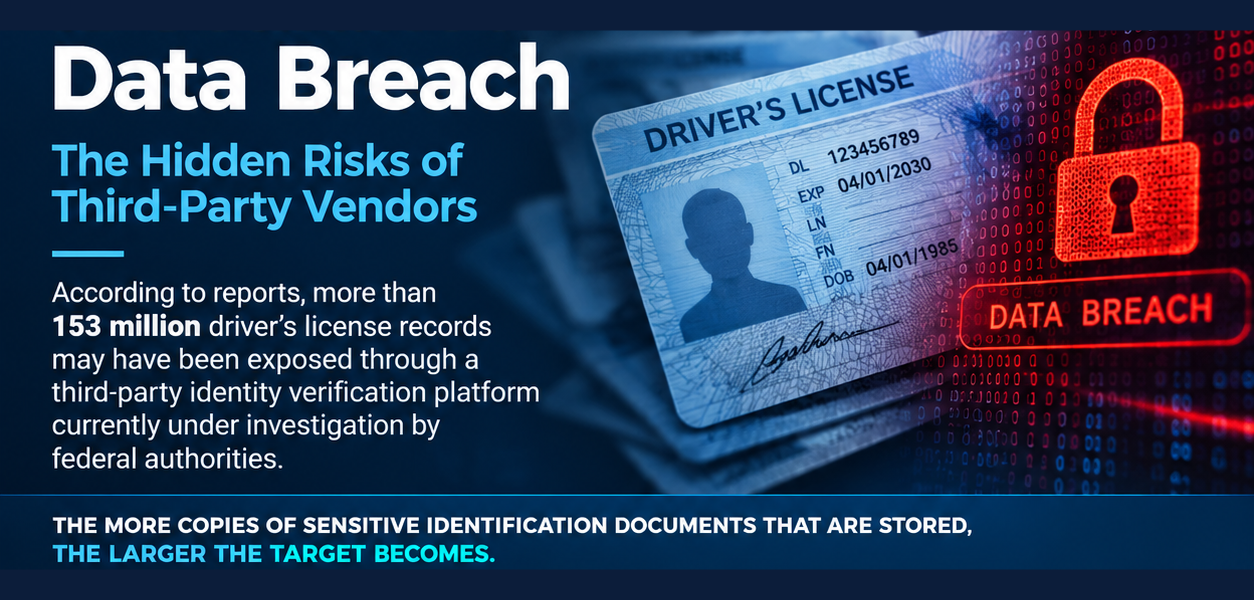
The recent reports surrounding the potential IDScan.net data breach have raised significant concerns across multiple industries. According to public reports, cybercriminals allegedly gained access to a massive database containing driver’s licenses and other government-issued identification documents. The FBI has confirmed it is investigating the matter.
While the investigation remains ongoing, the incident highlights a critical cybersecurity issue that many organizations overlook: third-party vendor risk.
For financial advisors, insurance agencies, healthcare organizations, and businesses that handle sensitive customer information, this event serves as an important reminder that your cybersecurity posture is only as strong as the vendors you trust with your data.
What Is IDScan.net?
IDScan.net is an identity verification platform used by organizations to verify customer identities, scan driver’s licenses, validate government-issued identification documents, and assist with compliance requirements.
Businesses often use identity verification platforms to:
Verify customer identities
Prevent fraud
Meet Know Your Customer (KYC) requirements
Comply with regulatory obligations
Streamline onboarding processes
Because these platforms process highly sensitive personal information, they have become attractive targets for cybercriminals.
What Has Been Reported?
According to cybersecurity researchers and media reports, a dark web service allegedly offered access to more than 153 million driver’s license records and millions of additional identity documents.
Although investigators have not publicly confirmed the exact source of the data, reports have linked the records to a widely used identity verification platform. Federal authorities continue to investigate the incident.
If confirmed, the breach could represent one of the largest exposures of driver’s license data in recent history.
Why Driver’s License Data Is So Valuable
Unlike passwords, driver’s licenses cannot simply be changed with a few clicks.
Identity documents contain information that cybercriminals can leverage for:
Identity theft
Financial fraud
Synthetic identity creation
Account takeover attacks
Social engineering campaigns
Unauthorized loan and credit applications
Once exposed, this information may remain valuable to criminals for years.
This makes identity verification platforms a high-value target for attackers seeking large volumes of personal information.
The Growing Risk of Third-Party Vendors
Many organizations focus heavily on securing their own networks while overlooking the security practices of their vendors.
A business may have:
Multi-factor authentication
Endpoint detection and response
Security awareness training
Email security solutions
Advanced firewall protection
Yet still experience data exposure because a trusted vendor suffers a breach.
This is particularly concerning for:
Financial Advisors
Registered Investment Advisors (RIAs)
Insurance Agencies
Independent Marketing Organizations (IMOs)
Broker General Agencies (BGAs)
Healthcare Providers
Professional Service Firms
When vendors process sensitive customer information, their security becomes your security problem.
Questions Every Organization Should Ask Vendors
The reported IDScan.net incident provides an excellent opportunity to review your vendor risk management program.
Consider asking:
Data Storage
Do you retain copies of customer identification documents?
How long is data retained?
Can retention periods be customized?
Security Controls
Is data encrypted in transit and at rest?
Is multi-factor authentication required?
Are security logs monitored continuously?
Compliance
Do you maintain a SOC 2 report?
Have you completed recent penetration tests?
What regulatory frameworks do you support?
Incident Response
How quickly are customers notified of a breach?
What is your documented incident response process?
What support is provided after a security event?
How Businesses Can Reduce Vendor Risk
Organizations should take a proactive approach to managing third-party cybersecurity risks.
Recommended actions include:
Perform Vendor Security Assessments
Review security controls before engaging vendors that handle sensitive data.
Review Data Retention Policies
Store only the information necessary to meet operational and regulatory requirements.
Request Security Documentation
Obtain SOC 2 reports, penetration testing summaries, and compliance certifications whenever possible.
Monitor Vendor Security Posture
Cybersecurity assessments should not be a one-time exercise. Vendors should be reviewed annually.
Update Incident Response Plans
Ensure third-party breaches are included in incident response planning and tabletop exercises.
Verify Cyber Insurance Coverage
Understand how vendor-related breaches are handled under your cyber liability policy.
Key Takeaways
While the investigation into the reported IDScan.net breach continues, the incident reinforces several important cybersecurity lessons:
Sensitive identity data remains a prime target for cybercriminals.
Third-party vendors can introduce significant business risk.
Vendor security assessments are critical for compliance and risk management.
Organizations should continuously evaluate how customer data is collected, stored, and protected.
Incident response planning must account for vendor-related security events.
Businesses that proactively manage third-party risk are better positioned to protect customer information, maintain regulatory compliance, and reduce the impact of future cybersecurity incidents.
How JND Consulting Group Can Help
JND Consulting Group helps financial services firms, insurance agencies, and small to mid-sized businesses strengthen cybersecurity, improve vendor risk management, and meet compliance requirements.
Our services include:
Vendor Risk Assessments
Managed Cybersecurity Services
Security Awareness Training
Compliance Readiness Programs
Microsoft 365 Security Hardening
Email Security and Data Protection
Incident Response Planning
If your organization relies on third-party vendors to process sensitive customer information, now is the time to evaluate your cybersecurity and compliance posture before the next breach becomes your problem.