
In today’s increasingly digital world, financial security isn’t just a personal responsibility—it’s a necessity. From small businesses to everyday consumers, the threat of cyberattacks, fraud, and identity theft is real. Whether you’re managing a company’s payroll or checking your banking app on your phone, your financial information must be guarded with care.
Below are essential financial security best practices to help you protect your assets, minimize risk, and stay one step ahead of cybercriminals.
 1. Use Strong, Unique Passwords (and a Password Manager)
Weak or reused passwords are one of the most common ways cybercriminals gain access to financial accounts. Use strong, complex passwords for every financial platform or service you use. A password manager like 1Password, Bitwarden, or LastPass can generate and store them securely, so you don’t have to remember them all.
Tips:
Avoid using names, birthdays, or easy-to-guess phrases.
Use multi-word passphrases (e.g., “CorrectHorseBatteryStaple!”) or auto-generated random strings.
Never reuse passwords across different services.
 2. Enable Multi-Factor Authentication (MFA)
Multi-Factor Authentication (MFA) adds a layer of security by requiring a second form of verification (like a code sent to your phone) in addition to your password. This is a must for online banking, payroll systems, and investment accounts.
Use apps like:
Google Authenticator, Microsoft Authenticator, or Authy for secure one-time codes.
 3. Keep Devices and Software Updated
Old software and outdated apps are prime targets for hackers. Keeping your operating systems, apps, browsers, and antivirus programs updated ensures you have the latest security patches.
Best practices:
Turn on auto-updates whenever possible.
Regularly review what apps have access to your financial data.
Use antivirus and anti-malware software.
 4. Monitor Financial Accounts Regularly
Don’t wait for your bank to alert you. Regularly checking your bank and credit card statements helps you catch suspicious activity early.
Set up alerts:
Enable email or SMS alerts for large purchases, login attempts, or changes to your account.
 5. Educate Your Team (or Family)
If you run a business or manage finances for others, ensure that everyone handling sensitive financial data is trained in cybersecurity best practices.
Include training on:
Phishing email detection
Safe browsing habits
Secure file sharing
Use of authorized devices only
6. Don’t Overshare Financial Information
Be wary of how much financial info you share—especially online or over the phone. Scammers often impersonate banks, government agencies, or service providers to trick you into giving away sensitive data.
Golden rule:
If you didn’t initiate the contact, don’t provide personal or financial information.
 7. Use Secure Networks and VPNs
Avoid accessing financial accounts on public Wi-Fi. If you must, use a virtual private network (VPN) to encrypt your internet connection and protect your data.
Pro tip:
Stick to your mobile network or use a trusted VPN provider like NordVPN, ExpressVPN, or ProtonVPN when traveling or working remotely.
8. Back Up Financial Data Securely
Whether it’s personal tax documents or company payroll, make sure all financial data is backed up securely—ideally using encrypted cloud storage or an external hard drive with encryption.
Follow the 3-2-1 Rule:
3 copies of data
2 different storage formats
1 copy offsite or in the cloud
 9. Recognize Red Flags for Financial Fraud
Fraudsters are getting smarter. Know the signs:
Unexpected requests for wire transfers
Emails asking for banking credentials
“Urgent” payment demands with unfamiliar links or attachments
If it seems suspicious, slow down.
Verify requests through a separate, trusted communication channel.
 Conclusion
Financial security is not a one-time setup—it’s an ongoing process. By staying informed and adopting proactive practices, you can greatly reduce your risk and maintain control over your financial well-being. Whether you’re protecting your own assets or safeguarding a business, a strong financial security foundation is one of the smartest investments you can make.
Need help implementing secure financial practices in your organization?
JND Consulting Group can help you assess your vulnerabilities, train your team, and deploy secure financial systems that meet compliance and industry standards. Give us a call to learn more.
Is Your Cloud Data Truly Safe? Why Microsoft 365 and Google Workspace Need Third-Party Backup
Facebook Twitter LinkedIn Is Your Cloud Data Truly Safe? Why Microsoft 365 and Google Workspace Need Third-Party Backup In today’s cloud-first world, most businesses rely

February 2026: Six Actively Exploited Zero‑Days — An Unprecedented Warning for the Industry
Facebook Twitter LinkedIn February 2026: Six Actively Exploited Zero‑Days — An Unprecedented Warning for the Industry Microsoft February 2026 Patch Tuesday just landed, and it’s
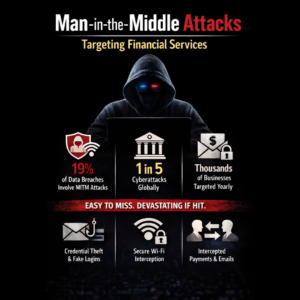
Man-in-the-Middle Attacks: How Financial Services Are Being Silently Hijacked — and How Easy It Is to Be Tricked
Facebook Twitter LinkedIn Man-in-the-Middle Attacks: How Financial Services Are Being Silently Hijacked Financial services organizations invest heavily in cybersecurity, yet one of the most dangerous